Japanese Whisky Explained: Houses, Labelling and How to Choose
Japanese whisky explained: its history, the 2021 labelling standard, the Suntory and Nikka houses, mizunara oak, how to choose a bottle and why some are scarce.
Written 19 October 2026

Japanese whisky has a clear reputation for refinement, but until recently the phrase itself had no firm definition. Understanding the history, the labelling rules and the main houses will help you read a label with confidence and choose a bottle that suits you.
What makes Japanese whisky distinct
Japanese distilling grew out of the Scotch tradition, and the founders of the industry looked to Scotland for their methods. What developed from there is a style that distillers in Japan have shaped to their own climate, casks and blending practice. Two features stand out.
The first is the category itself, which since 2021 has had a formal definition, set out below. The second is the wood, in particular mizunara, the native Japanese oak, which we return to below.
A short history
Yamazaki, on the outskirts of Kyoto, was opened in 1923 by Shinjiro Torii as the first malt whisky distillery in Japan. Torii hired Masataka Taketsuru, who had studied whisky in Scotland, and Taketsuru became its first distillery manager.
Taketsuru later left to pursue his own vision. Most sources place that in 1934, when he built the Yoichi distillery on Hokkaido, though one account gives 1933 for his departure. The two companies founded by these men, Suntory and Nikka, still dominate Japanese whisky today.
The labelling question
The new standard was introduced to make clear which products count as Japanese whisky, as the category's popularity grew. In February 2021 the Japan Spirits and Liqueurs Makers Association announced new labelling standards, effective from 1 April 2021, with members given until 31 March 2024 to comply in full.
Under the standard, a whisky labelled as Japanese must be produced entirely at a distillery in Japan, matured for a minimum of three years, and bottled at no less than 40% ABV. The only permitted addition is plain caramel colouring. Class Bar Magazine's summary also notes malted grains, Japanese water and maturation in wooden casks of no more than 700 litres.
Two cautions are worth knowing. The Association is government-approved but is not a government agency, so the standard binds its members and is enforced internally rather than by legislation. And the rules govern the label, not quality: a bottle that meets the standard is Japanese whisky, but that does not make it better or worse than one that does not. Nikka, a member, has said its existing labelling was unaffected and has published further information about its whiskies on its website.
The main houses
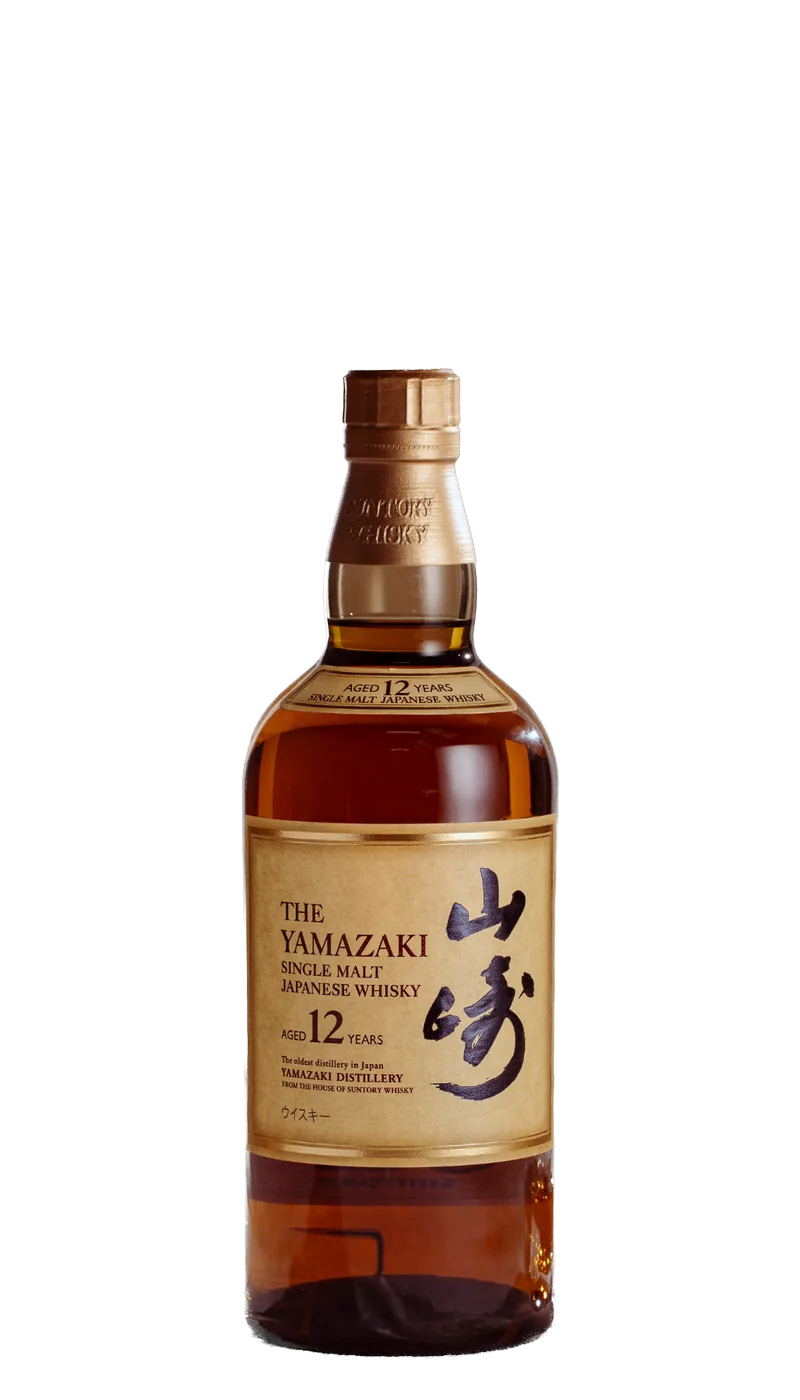
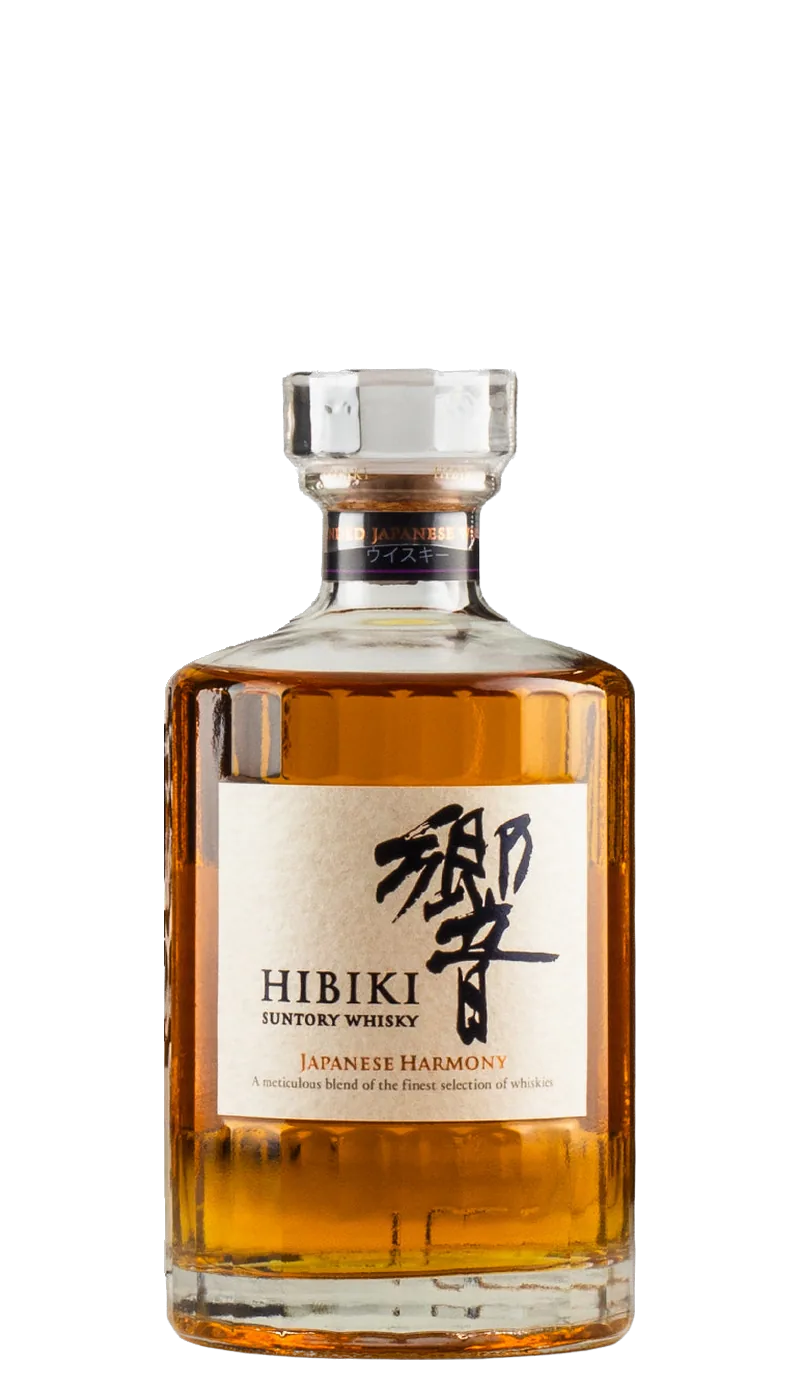
Suntory is the larger name. Yamazaki is the Kyoto distillery described above. Hakushu is Suntory's other single malt, and Hibiki is its blended whisky. From Suntory we currently list Yamazaki 12 Year Old and Hibiki Japanese Harmony.
Nikka is the second great house. Yoichi, in Hokkaido, is known for its coal-fired stills, which National Geographic reports are still heated by direct flame. Miyagikyo, near Sendai, lies further south, and Decanter notes that its position suited lighter, more elegant whiskies to complement Yoichi's bolder malts. As a guide, Yoichi tends to the bolder and Miyagikyo to the lighter.
Mizunara oak
Mizunara is Japanese oak. Suntory describes it as revealing, after long maturation, a complex aroma reminiscent of sandalwood, coconut and incense. It is also a difficult wood to work. Whiskipedia reports that it is rare and costly, grows twisted, is hard to cut into staves and is prone to leaking, and that it is more often used for finishing than for full maturation. That difficulty is part of the reason mizunara expressions are associated with older, more expensive bottles.
How to choose a bottle
Begin with the style you enjoy. If you prefer a lighter, more elegant style, Miyagikyo is the natural place to start. If you want something bolder, look to Yoichi. If you prefer a blend, Hibiki is the house to explore, and Yamazaki and Hakushu are the Suntory single malts.
Then consider age. The 12 Year Old bottles are the usual way in; the 18 and 21 Year Old bottles offer more depth and are better suited to marking an occasion. Finally, read the label. Check for a stated age, a bottling strength and the Japanese origin, and remember that the 2021 standard applies to members of the Association.
Why some bottles are allocated
Demand for Japanese whisky grew faster than the stocks of aged spirit that distillers had laid down. Reports cite the steep fall in whisky drinking in Japan during the 1980s, after which producers cut output, before demand returned and then climbed worldwide. In 2018 Suntory announced it would discontinue Hakushu 12 and Hibiki 17, saying it lacked enough aged stock to meet demand, and it has since introduced no-age-statement expressions to ease the pressure.
Because aged whisky cannot be made faster, the oldest age statements are the hardest to replace. Availability varies over time, so it is sensible to ask about any particular bottle.
Frequently asked questions
Is all whisky labelled Japanese made in Japan?
The Association's standard, effective from 1 April 2021 with full compliance due by 31 March 2024, sets the rules for the term, including production in Japan and at least three years' maturation. It applies to Association members.
Who founded Yamazaki and Yoichi?
Shinjiro Torii opened Yamazaki in 1923. Masataka Taketsuru, who worked there first, built Yoichi on Hokkaido, most often dated to 1934.
What is mizunara oak?
It is native Japanese oak, prized for aromas that Suntory likens to sandalwood, coconut and incense. It is difficult to work, so it is usually found in older or more limited bottles.
Which Japanese whisky is best to begin with?
A 12 Year Old such as Yamazaki 12 is a sensible start. Miyagikyo is a good choice if you prefer a lighter, more elegant single malt.
Why are some Japanese whiskies hard to find?
Demand outgrew aged stock, and aged whisky takes years to replace. The oldest age statements are the most limited.
Further reading
- Wikipedia - Yamazaki distillery
- Whisky Magazine - New Japanese whisky labelling standards released
- Class Bar Magazine - Japanese whisky makes steps towards transparency
- Suntory House - Yamazaki 18 Years Old Mizunara
- Whiskipedia - Mizunara casks
- Bevinfo - Suntory discontinues two whiskies amidst stock shortage